Showing posts with label God. Show all posts

Friday, April 13, 2007

Einstein on God, atheism, science and religion


While speaking on the topic of atheism...

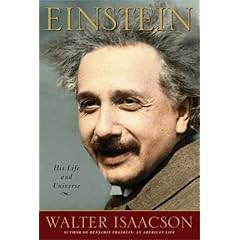
Here are some excellent quotes from Albert Einstein about God, religion, science and atheism from the soon to be released book Einstein: His Life and Universe by Walter Isaacson. © 2007 by Walter Isaacson. (To be published by Simon & Schuster, Inc.)

Shortly after his 50th birthday, Einstein also gave a remarkable interview in which he was more revealing than he had ever been about his religious sensibility. It was with George Sylvester Viereck, who had been born in Germany, moved to America as a child and then spent his life writing gaudily erotic poetry, interviewing great men and expressing his complex love for his fatherland. Einstein assumed Viereck was Jewish. In fact, Viereck proudly traced his lineage to the family of the Kaiser, and he would later become a Nazi sympathizer who was jailed in America during World War II for being a German propagandist.

Viereck began by asking Einstein whether he considered himself a German or a Jew. "It's possible to be both," replied Einstein. "Nationalism is an infantile disease, the measles of mankind."

Should Jews try to assimilate? "We Jews have been too eager to sacrifice our idiosyncrasies in order to conform."

To what extent are you influenced by Christianity? "As a child I received instruction both in the Bible and in the Talmud. I am a Jew, but I am enthralled by the luminous figure of the Nazarene."

You accept the historical existence of Jesus? "Unquestionably! No one can read the Gospels without feeling the actual presence of Jesus. His personality pulsates in every word. No myth is filled with such life."

Do you believe in God? "I'm not an atheist. I don't think I can call myself a pantheist. The problem involved is too vast for our limited minds. We are in the position of a little child entering a huge library filled with books in many languages. The child knows someone must have written those books. It does not know how. It does not understand the languages in which they are written. The child dimly suspects a mysterious order in the arrangement of the books but doesn't know what it is. That, it seems to me, is the attitude of even the most intelligent human being toward God. We see the universe marvelously arranged and obeying certain laws but only dimly understand these laws."

Is this a Jewish concept of God? "I am a determinist. I do not believe in free will. Jews believe in free will. They believe that man shapes his own life. I reject that doctrine. In that respect I am not a Jew."

Is this Spinoza's God? "I am fascinated by Spinoza's pantheism, but I admire even more his contribution to modern thought because he is the first philosopher to deal with the soul and body as one, and not two separate things."

Do you believe in immortality? "No. And one life is enough for me."

Einstein tried to express these feelings clearly, both for himself and all of those who wanted a simple answer from him about his faith. So in the summer of 1930, amid his sailing and ruminations in Caputh, he composed a credo, "What I Believe," that he recorded for a human-rights group and later published. It concluded with an explanation of what he meant when he called himself religious: "The most beautiful emotion we can experience is the mysterious. It is the fundamental emotion that stands at the cradle of all true art and science. He to whom this emotion is a stranger, who can no longer wonder and stand rapt in awe, is as good as dead, a snuffed-out candle. To sense that behind anything that can be experienced there is something that our minds cannot grasp, whose beauty and sublimity reaches us only indirectly: this is religiousness. In this sense, and in this sense only, I am a devoutly religious man."

.....

But throughout his life, Einstein was consistent in rejecting the charge that he was an atheist. "There are people who say there is no God," he told a friend. "But what makes me really angry is that they quote me for support of such views." And unlike Sigmund Freud or Bertrand Russell or George Bernard Shaw, Einstein never felt the urge to denigrate those who believed in God; instead, he tended to denigrate atheists. "What separates me from most so-called atheists is a feeling of utter humility toward the unattainable secrets of the harmony of the cosmos," he explained.

In fact, Einstein tended to be more critical of debunkers, who seemed to lack humility or a sense of awe, than of the faithful. "The fanatical atheists," he wrote in a letter, "are like slaves who are still feeling the weight of their chains which they have thrown off after hard struggle. They are creatures who--in their grudge against traditional religion as the 'opium of the masses'-- cannot hear the music of the spheres."

Einstein later explained his view of the relationship between science and religion at a conference at the Union Theological Seminary in New York. The realm of science, he said, was to ascertain what was the case, but not evaluate human thoughts and actions about what should be the case. Religion had the reverse mandate. Yet the endeavors worked together at times. "Science can be created only by those who are thoroughly imbued with the aspiration toward truth and understanding," he said. "This source of feeling, however, springs from the sphere of religion." The talk got front-page news coverage, and his pithy conclusion became famous. "The situation may be expressed by an image: science without religion is lame, religion without science is blind."

SOURCE: Time: 5 APRIL 2007: Einstein and Faith

HAT TIP: Get Religion

<>< TM

Atheist Evangelism

In my article "Why Be a Christian?" I make a reference to the increasingly nasty rhetoric coming from militant atheist fundamentalists. Well, I'm not the only one who's been noticing, not by a long shot...

In Thursday's Wall Street Journal (where else?) there was a very long, interesting article (though not very well written) about the increasing militancy of the atheists of Europe, who seem to be in a war of rhetoric with their none too tolerant counterparts: Islam. However, it's not just Islam that's on the rise in Europe, as Europeans get fed-up with the emptiness and nihilism of their socialist utopias, they are turning back to Christianity, though it's only in small numbers. Still, it seems as if secular humanism has bottomed out, and the non-faith of atheism is taking note.

Nature abhors a vacuum, and so does the human spirit; you can only fill it with so much booze, drugs and sex, then it either becomes numb or angry. The meaning of life is not the pleasure principle; only a fool would be convinced that the meaning of life is maximized pleasure by any means possible, which seems to be the only positive message that the atheists have at their disposal. It's easy to criticize religion, I do it all the time, but it's much, much more difficult to come up with a creditable alternative, and man being the measure of all things simply doesn't measure up.

So here is a nice, long excerpt from the WSJ article:

THE NEW CRUSADERS
As Religious Strife Grows,
Europe's Atheists Seize Pulpit

Islam's Rise Gives Boost
To Militant Unbelievers;

The Celebrity Hedonist

By ANDREW HIGGINS
April 12, 2007; Page A1


CAEN, France -- With 40 minutes to go before show time, the 500-seat Alexis de Tocqueville auditorium was already packed. A fan set up a video camera in the front row. A sound engineer checked the microphones.

The star: Michel Onfray, celebrity philosopher and France's high priest of militant atheism. Dressed entirely in black, he strode onto the stage and looked out at the reverential audience for his weekly two-hour lecture series, "Hedonist Philosophy," which is broadcast on a state radio station. "I could found a religion," he said.

Mr. Onfray, 48 years old and author of 32 books, stands in the vanguard of a curious and increasingly potent phenomenon in Europe: zealous disbelief in God.

Passive indifference to faith has left Europe's churches mostly empty. But debate over religion is more intense and strident than it has been in many decades. Religion is re-emerging as a big issue in part because of anxiety over Europe's growing and restive Muslim populations and a fear that faith is reasserting itself in politics and public policy. That is all adding up to a growing momentum for a combative brand of atheism, one that confronts rather than merely ignores religion.

Karen Armstrong, a former Catholic nun and prominent British author on religion, calls the trend "missionary secularism." She says it mimics the ardor of Christianity, Islam and Marxism, all of which have at their core an urge to convert nonbelievers to their worldview.

Mr. Onfray argues that atheism faces a "final battle" against "theological hocus-pocus" and must rally its troops. "We can no longer tolerate neutrality and benevolence," he writes in "Traité d'athéologie," or Atheist Manifesto, a best seller in France, Italy and Spain. "The turbulent time we live in suggests that change is at hand and the time has come for a new order."
[Michel Onfray]

As with many fights involving faith, Europe's struggle between belief and nonbelief is also a proxy for other, concrete issues that go far beyond the supernatural. In this case, they involve a battle to define the identity of a continent.

Half a century after the 1957 Treaty of Rome laid the foundations for the now 27-nation European Union, Europe has secured peace and prosperity. But it is deeply uncertain about what binds the bloc together beyond mere economic self-interest. Says Ms. Armstrong: "There is a big fight going on to define European civilization."

In London last month, leading British atheists squared off with defenders of faith in a public debate on the motion, "We'd be better off without religion." Tickets cost nearly $40 but so many people wanted to attend that the event was moved to a bigger venue with over 2,000 seats. It still sold out. The audience declared the atheists the victors, by a margin of 1,205 to 778, with a few score abstentions.

In Germany, a wealthy furniture manufacturer is funding a "think tank of Enlightenment," a group of scientists and others committed to debunking religion. It is named after Giordano Bruno, a 16th-century philosopher and cosmologist who was burnt at the stake as a heretic. In Italy, one fervent nonbeliever has gone to the European Court of Human Rights with a claim that the Roman Catholic Church is guilty of fraud: Jesus, he says, never existed.

Prime Catalyst

Alarm over Islam has acted as the prime catalyst for much of the polemic. Europe's Muslim populace, estimated at between 15 million and 20 million people, is growing more numerous, more vocal and, in some cases, more religious. The clash also feeds on a deeper confrontation that dates back to Europe's Enlightenment, the 18th-century intellectual movement that asserted the primacy of reason over superstition.

"The battle over religion is restarting. It is going to be a difficult one," says Terry Sanderson, president of Britain's National Secular Society, an organization that was founded in the 19th century but has now gained a new vibrancy. Membership has doubled in the past four years, to around 7,000, says Mr. Sanderson. For converts from Christianity, the society provides a certificate of "de-baptism." "Make it official!" urges the society's Web site, www.secularism.org.uk2.

The atheist cause won a big-name endorsement late last year when pop star Elton John, in an interview, said organized religion turned people into "hateful lemmings" and should be banned.

The backlash against religiosity has even seeped into Europe's Muslim community. In February, Mina Ahadi, an Iranian-born woman in Cologne, Germany, set up the Continent's first Muslim atheist group: the National Council of Ex-Muslims. She immediately started getting death threats and was put under police protection.

"Our main message is: 'We don't believe,' " says Ms. Ahadi, talking in a coffee shop next to Cologne Cathedral, a towering tribute to faith that took 600 years to complete. A police guard hovered nearby.

Atheism, Ms. Ahadi says, must confront religion head-on -- and adopt its methods. Her group started with just 30 members in February and a month later had more than 400. It is lobbying European Union officials for restrictions on the veil and organizing a public meeting at which ex-Muslims will explain why they quit. "If you want to work against Muslim movements, you have to be like them," she says. "We have to go outside and say what we're fighting for."

Europe's atheist campaigners have also made a splash in America. "The God Delusion," a book by Oxford Professor Richard Dawkins, has been on the New York Times hardcover nonfiction best-seller list for 28 weeks. Another British atheist, U.S.-based writer Christopher Hitchens, has written his own antireligious treatise, "God Is Not Great: How Religion Poisons Everything," due out in May.

Christianity, once the bedrock of Europe's identity, has been losing worshipers on the Continent for at least half a century, though some opinion polls suggest the downward trend has bottomed out. Around three-quarters of Europeans still describe themselves as Christians. But only a small minority go to church. In Western Europe, according to polls, fewer than 20% do.

The number of atheists is hard to pin down. Some surveys put the figure at under 3%, but others say it is much higher.

...

Religious leaders are pushing back against the assertive unbelievers. The Church of England's Archbishop of York, John Sentamu, complained in a December statement about "illiberal atheists who have joined forces with aggressive secularists." He was responding to demands that Jesus be removed from nativity plays and that Christmas parties be called "winter festival" gatherings.

Mr. Onfray's atheist tract, recently translated into English, has prompted three book-length rebuttals by angry Christians and a flood of articles. To counter Prof. Dawkins's "God Delusion," an Oxford theology professor wrote his own book, "The Dawkins Delusion."

Both atheists and their foes agree on one thing: God -- declared dead over a century ago by German philosopher Friedrich Nietzsche -- is making a comeback, at least as a focus of controversy. "Faith is on the public agenda in a way that is unprecedented in recent times," proclaimed the founding manifesto of Theos, a new British-based Christian think tank.

Europe's atheist movement has no Vatican-like central command and springs from many different sources. Some adherents have personal grievance. Mr. Onfray spent part of his youth in a home run by Catholic priests, who he says mistreated him and abused others. Ms. Ahadi, head of the German ex-Muslims group, says her first husband was executed by Islamic revolutionaries in Iran.

....

Pierre Andrieu, a 63-year-old former executive with BNP-Paribas, a French bank, travels up to Caen each week from Paris for the lecture show. He makes the trip, he says, because he shares Mr. Onfray's take on faith--and fears that religion is making a comeback. "It is far more present than before," he says. "This need for religion is very, very strong. Religion is like magic. It is all about tricks."

SOURCE: Wall Street Journal: 12 APRIL 2007: THE NEW CRUSADERS: As Religious Strife Grows, Europe's Atheists Seize Pulpit

<>< TM

Monday, March 05, 2007

the problem of evil: part 3: what God has done about it

Part 1: The problem of evil
Part 2: The problem of evil: how do we know what is good or evil?
I'm sorry it's taken so long to publish the third and final installment of the problem of evil series. February had been a very, very busy month for yours truly, and it looks like March will be even worse. However, here it is: the last installment of the series. Next, I hope to post an article about the advantages of being a Christian. <>< TM
If you've been around for a while, and if you have an interest in God and theology, one of the arguments you hear time and time again cited as evidence against the existence of God is that the world is full of evil, and God doesn't lift a finger to do anything about it. No God who wants to be known as "good" would ever do such a thing, therefore, God cannot exist because evil does.

Yet no where in the Bible or the writings of Christians or Jews does it state that because God exists, there will be no evil. As a matter of fact, Christian and Jewish texts state quite clearly and emphatically that because God exists, and because he created human beings to have free will, then there is going to be a whole lot of evil. In a bizarre, but very real way, evil proves--not disproves--the existence of a good, loving and holy God.

God loves us so much that he allows us the choice to be either good or evil, and we choose accordingly. You cannot call a person good who forces you, against your will, to be a good, moral person. That is coercion and tyranny, not love and goodness. So while we cannot blame God for being evil, we can blame him for allowing the possibility of evil, a possibility that too often manifests itself in this life. And God very willingly, and very appropriately, takes full responsibility for this. If there is no evil, there cannot be any good. You simply can't have one without the other.

But for those who desire to choose goodness, God is very willing to lend you a helping hand.

GOD AS JESUS

At the core of the Christian religion is a person named Jesus. While Jesus was a man just like the rest of us, he was also, quite literally, God himself. While theologians might cringe at me for saying this, God came to earth as a man to show us a way to conquer evil. Of course, God is no fool, and the means he provides to conquer evil fully take into consideration the root source of all evil on earth: the human heart. Unless you conquer the evil and hate in your own heart, there is no way you can overcome it in its various manifestations as war, murder, rape, theft, vandalism, and so on. The cure for evil begins in the heart of every single human being.

For those of you who take things a little too literally, I'm not talking about the physical heart that is located in your chest and pumps blood throughout your body, rather I'm referring to a metaphysical heart that represents the very core of our being. Depending on your own ideas and background, synonyms for the type of heart I'm talking about would be mind, spirit, soul or consciousness.

Unless we conquer the evil that's within our own being, we cannot do or say anything about the evil so prevalent in the world. It's very easy to denounce this person and that person for their evil acts, it's another thing to provide a solution for evil.

God is very respectful of the gift of free will that he has given us, to the point where we can use it and abuse it to our detriment. And so the solution for evil is presented as gift, rather than forced upon us unwillingly. Those who are desperate for such a remedy accept the gift quickly with little protest, while those of us who think we're OK have little need of it, so we don't value it, if we even bother to acknowledge it's existence at all.

ETERNAL LIFE

The gift I'm referring to is eternal life. More specifically, it is the knowledge that when we die, there will be an opportunity to be resurrected from the dead, a resurrection that is permanent and that promises a new life, better than the one we knew previously, much better in fact.

Proof of life after death was provided in the God/man Jesus, who suffered just like we do, and suffered evil in the same way we do: from other men. Due to his popularity and his denouncements and criticisms of the current religious system then dominant in first century Israel: Phariseeism, he was crucified by the Romans due to the insistent urgings of the religious-political Pharisee party. There was no such thing as the separation of church in state in those days.

After Jesus was crucified and died on a Roman cross, he was buried in a tomb of a rich man, then left for dead..because he was dead. But, unbeknown to even his own disciples, Jesus had a little surprise in store: he came back from death, to life, and will never, ever die again.

He showed himself to his disciples and to various others, and then his disciples, armed with the amazing revelation that death is not final, spread the word of Jesus and his good news throughout the rest of the world, a message which is still going strong nearly 2,000 years later.

Of course eternal life is not something that is the right and privilege of everyone, but it is a gift given only to those only who believe. By believe I mean that a person must believe in the idea of eternal life, believe in the person of Jesus and his message, and be willing to live the kind of live that Jesus advocated. In other words, this gift is conditional; it's not given out to just anyone, but only to those who show themselves worthy of it by accepting the "strings" attached.

It is this gift, and the attached strings, that is God's solution for the problem of evil. So how does this gift nullify evil? Simple: the conditions for obtaining and keeping the gift of eternal life is living the teachings and writings of the apostles and prophets as recorded in the Bible. But you don't need to memorize the entire Old and New Testaments in an attempt to live by all the rules and regulations, and in fact you wouldn't be able to keep them even if you wanted to, because they apply to a time and place that is no longer relevant to our modern life style.

THE GOLDEN RULE

But there is one, very simple rule, that if applied, can help reduce the amount of the evil in the world rather significantly. It is commonly known as the Golden Rule: don't do things to other people that you wouldn't want them to do to you.

Don't want people to lie to you? Then don't lie to other people.

Don't want other people to criticize you and put you down? Then don't criticize other people and put them down.

Don't want other people to beat you up? Then don't go around beating up others.

Now one quickly realizes that this does not guarantee that you are going to be treated well by others, for the obvious reason that not everyone is going to want to accept the conditions of the agreement for eternal life. There will be those who really don't care or think much about how others should be treated, and there lack of concern will ultimately end up in their own eternal destruction.

However, those who do follow this one simple rule, and do so consistently, will at least be reducing the amount of evil so prevalent in our society, if not securing their place in the kingdom of Heaven.

But there is a positive corollary to this rule as well, and that is that you need to treat other people just like you would want yourself to be treated. It can be summed up in the old bromide "what goes around comes around."

Do you want other people to treat you with respect? Then you need to treat other people with respect.

Do you want people to speak well of you? Then you need to speak well of others.

Do you want other to help you in a time of need? Then you need to help others in a time of need.

See how simple this is? Nothing to it. Apply this one rule to your life, and you will do more to eradicate evil from this world than all the political promises of all the political parties of the world combined. It is not social programs that eliminate evil, it is the right actions of individuals that do it.

THE HOLY SPIRIT

And since it can sometimes be rather difficult for us to be motivated to do good, God provides us a very special resource to help us in this quest: his Holy Spirit. Jesus is the incarnation of God who you can walk up to and have a conversation with, or you can beat the crap out of him then have him executed. But the Holy Spirit is an incarnation of God that goes one step further, it is God living inside of you.

Now when we think of other beings living inside of us, our minds may quickly flash to visions of the Exorcist, or those many different sci-fi flicks where aliens overtake people's bodies and minds, like the famous film Invasion of the Body Snatchers. But inviting the Holy Spirit of God to take up residence in you is nothing like those nightmares of sci-fi and horror movies. Instead of taking over, he simply acts in an advisory role, only offering his assistance when asked--kind of like a consultant. If you want to ignore him, you can, there will be no evil consequences for doing so, other than what your own foolish actions deserve.

So God not only provides a wonderful incentive for living a good, upright life: eternal life; but also the means of doing so: the Holy Spirit.

And that, in a nutshell, is God's plan for dealing with evil. There's just one problem of course: getting people to "buy in" to this plan, which is becoming increasingly more difficult to do. Hence, the world is on a long, slow downward spiral, as immediate gratification of selfish desires becomes more important than living for a future goal that is difficult to comprehend, let alone believe.

ETERNAL PUNISHMENT

Of course there is a corresponding stick to the carrot of eternal life: and that would be eternal punishment, better known as eternal damnation. This is reserved for those who knowing good and evil, prefer to choose the evil. Now this does not mean that you are a psychotic killer or abuse small children and animals; rather all it takes to be evil is to ignore the needs and suffering of others. Yes, God is a good, loving father, but he's not going to allow those who have chosen a life of selfishness and rebelliousness to be rewarded with eternal life. If a person has no regard for those living all around him, why should God then reward that person for their selfish behavior? Since a selfish person is rapt up in their own little world, they will be sent to a place where they won't ever have to bother with another soul again--an eternal solitary confinement.

But don't blame God for damning those people who have chosen a self-centered life; more often than not they are conscious of the choice they are making, and in their own perverted way, are willing to pay with their lives for the little bit of power, wealth and comfort that they get in the here & now by their abrasive behavior.

So the resurrection of Jesus not only demonstrates the reward of eternal life, the way he lived his life here on earth is also very much a demonstration of how he expects us to act. And for those who think that following Jesus' example is a waste of time, Jesus lets us know in no uncertain terms that their eternal punishment is well deserved:
"Who then is the faithful and wise servant, whom the master has put in charge of the servants in his household to give them their food at the proper time? It will be good for that servant whose master finds him doing so when he returns. I tell you the truth, he will put him in charge of all his possessions. But suppose that servant is wicked and says to himself, 'My master is staying away a long time,' and he then begins to beat his fellow servants and to eat and drink with drunkards. The master of that servant will come on a day when he does not expect him and at an hour he is not aware of. He will cut him to pieces and assign him a place with the hypocrites, where there will be weeping and gnashing of teeth.

Matthew 24:45-51
Whether or not you think God deals properly with evil here in this life, know for sure that it will be dealt with most severely in the next. Jesus had a bit of "bad news" to go along with his good news: those who persist in doing evil will be rewarded with eternal pain and suffering.

While one may think an eternity of pain and suffering is a harsh penalty for temporal evil, do keep in mind that those who choose to do good are rewarded with an eternity of joy and pleasure. Both reward and punishment are extreme in comparison to a temporal life on earth. This only goes to show that our lives are far, far more valuable than many of us realize: our actions and beliefs truly have an eternal significance.

FOLLOW JESUS' EXAMPLE

Christians have done a poor job of communicating the essential truths of Jesus' message, let alone living according to his teachings. For that, I am deeply ashamed and embarrassed. And yet, I still very much believe that the simple message of Jesus is a worth living for, and I will continue in my own quest to live a life worthy of eternal life, even if no one else sees the value in it.

But I would encourage the dear reader of this blog to follow after me, if only for the reason that such a path will do a lot to bring about a great deal of good on this earth, and will help to minimize evil. Whether or not you think God exists or that eternal life is a possibility, you must admit that the simple logic of the rule "don't do things to other people that you don't want done to you" is a very effective way to live one's life.

<>< TM
Wednesday, January 17, 2007

the problem of evil

The name of this blog is Theodicy (thee-ODD-i-see). The term theodicy was coined by the philosopher/diplomat Leibniz, and is one of his most famous works, other than the invention of calculus and binary numbers (minor trifles by comparison).

Theodicy is simply the philosophical/theological desire to absolve God of any wrong doing. What type of wrong doing is God guilty of? All the evil that happens all over the world on a daily basis. After all, if he's a supreme being, he should easily be able to put a stop to it, shouldn't he?

Another way of phrasing the problem of theodicy is the age old question "Why do bad things happen to good people?" Or the famous question of college dorms "why does an allegedly good God allow evil on earth?" Of course these questions assume that we know what we are talking about when we use the terms "God" "good" and "evil." But it's always a good idea to define terms, so allow me to offer my own very simplistic, broad definitions:

GOD = The supreme being who created everything we can see and know. Specifically, the supreme being cited throughout the Bible of Christians and Jews.

GOOD = That which causes a person happiness, or at least alleviates their suffering.

EVIL = That which causes a person pain, or increases their suffering.

Now, just to be clear, when I talk about increasing or decreasing suffering, I'm talking in net terms--ultimate good or ultimate evil. It can be very painful to go to a dentist or surgeon to have things removed from your body, especially if cutting or drilling is required. However, the process is ultimately good if it results in the net alleviation of pain, suffering or death.

Likewise, something can be ultimately evil even if that which leads up to it is rather pleasurable. For instance, having sex with someone is often the ultimate in pleasure and happiness, but if that union should result in a person be contaminated with the AIDS virus, we can honestly say that ultimately a great evil has been done, given that the sexual partner knew that they were HIV positive.

So why is there evil? Well, the surprising truth is you cannot ask that question without also asking another: why is there good? And even a THIRD question: How do we know the difference between good and evil? In other words, you can't have one without the other. Why not? Well, how could you know one, without knowing the other? Of course there are beings on this earth who really don't know the difference: the entire animal and plant worlds for instance. No, not even the hallowed dolphin nor the noble gorilla can put forth opinions or observations on what is good or evil--that is the sole domain of men.

There are those who argue that good and evil are two sides of the same coin, and therefore there's just one coin. In other words, good and evil do not really exist, they are just convenient figments of our imagination.. Of course the intellectuals who makes these sort of pronouncements are almost always fully tenured members of esteemed institutions of higher education who are paid by the word to make silly proclamations in order to prove their intellectual superiority. Because of that, we can--of course--dismiss these sort of pronouncements out of hand.

Both you and I know exactly what good and evil are, and we know that they do--in fact--exist. How do we know? Because when something truly evil happens to us, we are sad, downcast, angry and/or depressed. When something truly good happens to us, we are happy, joyful, at ease and sometimes even grateful. And because most of us reading this blog are in the set of humans beings, we know what these concepts mean when they are used in a sentence.

Now, I do not consider the various extremes of nature as being good nor evil...in my system, they are simply acts of nature. While you may certainly consider it evil if a shark bites your leg off while swimming in the warm waters of Florida, in my system all that's happened is a hungry shark eating. He can't help being a hungry shark any more than you can help being a tasty snack. But you can choose to be, or not to be, in the ocean. Our friend the hungry shark simply does not have that option. He can no more walk out of the ocean on his tail fin and order a #2 at McDonald's than you can go swimming in the Atlantic, deep diving for tasty giant squid that live 5,000 feet below the ocean's surface. Yet we humans can take a submersible down to 5,000 feet, and live down there for quite some time; which illustrates another difference between us and the exciting but stupid world of animals: we make some really cool stuff. When gorillas begin to start designing jet airliners on advanced CAD/CAM systems, then you can start boasting to me about how human-like they are.

Same for weather: hot or cold, earthquakes, tornadoes, hurricanes and snow storms are just that: weather. They do not act with evil intent, nor are they particularly good nor evil, they just are. No more than a rock laying on the ground can be said to be good or evil.

The sets of all that is good vs. evil requires an agent who can determine what is good or evil, and act on either...whether willingly or under coercion. In other words, good and evil are really just adjectives that describe the actions and attitudes of our fellow human beings, or of ourselves. Good actions and attitudes cause us to feel happy, and evil actions and attitudes cause us to feel pain, anger, and sadness.

While I do not deny that things which occur in the natural world cause us to be happy or sad, I do not believe things in the natural world are working from a a motive of good or evil. It might be a good, beautiful thing to watch a morning sunrise, and it might be a bad, awful thing to be attacked by a swarm of killer bees, but the sun and the bees are only doing what they do because of what they are. The sun cannot choose to rise or set, the bees cannot choose to swarm and sting, they do it because that is their nature.

But humans--and humans alone--act by choice, even if the choice is made only unconsciously or by default.

So, to sum up, we can assign acts of nature to the good or evil category if we want to, in terms of how it makes us feel, but my point is that the good and evil judgments we make are actually the product of the hearts, minds and will of men, not nature. We have choices to make, the natural world does not.

In general, we assign murder, rape, violence, pillaging, and taxes to the category of "evil" Notice how all these things can be verbs and adjectives--actions and descriptions--not things. And yes, you certainly can--and are--being taxed.

Likewise, charity, love, generosity, gentleness, and giving are normally assigned to the category of "good" Again notice that these are verbs and adjectives, actions and descriptions, not things.

The point of all this? Things in themselves are neither good nor evil, it is the intent and will and actions of men that are truly either good or evil.

(Note to feminists reading this blog: I'm intentionally using the third person pronon "men" in the sense of it being inclusive of all human beings, because it's a much more poetic term than "human beings". And besides, I don't subscribe to feminist ideology anyway...)

Men can certainly choose to act in an evil or good manner; there is really little to stop you either way. Not so the rock, the shark, or the sun.

If I may, I think a better and more accurate question we need to ask is the following: "Why do men do evil things, and why doesn't God stop them?" But then again, there is a converse question also implied: "Why do men do good things, and why doesn't Satan stop them?" One cannot discuss evil, without it's converse: good. Why is it that no one wonders why there is good on earth? Why does evil take such an unfair share of our attention?

Theologians say that God is ultimate good, therefore he should not allow people to do evil things. And if He were really, really good, it would always be sunny and 72 degrees outside, with only the most gentle of breezes...and the sun would rise promptly at 6 am, and go down promptly at 9 pm. Shoot, if we want him to be good, we might as well get specific.

Well, for reasons that are rather simple to understand, God has deemed man, above and beyond all the animals, to have the knowledge of good and evil, along with the ability to act in either fashion. This is His gift to us, and it is a GOOD gift. It is that which separates us from the brute beasts and plant life.

NEXT TIME: How we got the gift of the knowledge of good and evil (Hint: we stoled it.)

<>< TM