Posting for later research and comment:
MSNBC has an entire web site, devoid of banner ads, that is an information warehouse on the Virginia Tech shootings.
URL: http://www.msnbc.msn.com/id/18188852/
<>< TM
Saturday, April 21, 2007


Friday, April 20, 2007
Va. Tech shooter did not talk much as a child, relatives say
for later research and comment...
SOURCE: Chron.com: 20 APRIL 2007: Va. Tech shooter did not talk much as a child, relatives say
I highly encourage everyone to read the full article. Very interesting.
<>< TM
Cho left South Korea with his family in 1992 to seek a better life in the United States, Kim said. The family never visited their homeland, and Kim said he did not recognize his nephew when his picture appeared on television as the shooter.
"I am devastated," he said between heavy sighs. "I don't know what I can tell the victims' families and the U.S. citizens. I sincerely apologize ... as a family member."
Cho's parents have receiving official protection since the shooting, South Korea's ambassador to Washington said today.
"We've confirmed that the parents are being safely protected by U.S. investigative authorities," Ambassador Lee Tae-sik told MBC Radio.
Lee said U.S. authorities declined to say where the parents were "because they move from place to place everyday."
The parents had been working at a dry cleaners in suburban Washington.
In South Korea, they ran a small book store in Seoul, Kim said. The family lived in a two-room apartment no larger than 430 square feet.
"They had trouble making ends meet in Korea. The book store they had didn't turn much profit," the uncle said.
SOURCE: Chron.com: 20 APRIL 2007: Va. Tech shooter did not talk much as a child, relatives say
I highly encourage everyone to read the full article. Very interesting.
<>< TM
"Va. Gunman's Family Feels Hopeless, Lost"
Posting for later research and comment:
HAT TIP: Drudge Report
<>< TM
BLACKSBURG, Va. (AP) - The family of Virginia Tech gunman Seung-Hui Cho told The Associated Press on Friday that they feel "hopeless, helpless and lost," and "never could have envisioned that he was capable of so much violence." "He has made the world weep. We are living a nightmare," said a statement issued by Cho's sister, Sun-Kyung Cho, on the family's behalf.SOURCE: Breitbart.com: 20 APRIL 2007: Va. Gunman's Family Feels Hopeless, Lost
It was the Chos' first public comment since the 23-year-old student killed 32 people and committed suicide Monday in the deadliest shooting rampage in modern U.S. history.
Raleigh, N.C., lawyer Wade Smith provided the statement to the AP after the Cho family reached out to him. Smith said the family would not answer any questions, and neither would he.
"Our family is so very sorry for my brother's unspeakable actions. It is a terrible tragedy for all of us," said Sun-Kyung Cho, a 2004 Princeton University graduate who works as a contractor for a State Department office that oversees American aid for Iraq.
"We pray for their families and loved ones who are experiencing so much excruciating grief. And we pray for those who were injured and for those whose lives are changed forever because of what they witnessed and experienced," she said. "Each of these people had so much love, talent and gifts to offer, and their lives were cut short by a horrible and senseless act."
HAT TIP: Drudge Report
<>< TM
Thursday, April 19, 2007
picked on, pushed around and laughed at
Posted for later research and commentary....
HAT TIP: Drudge Report
<>< TM
BLACKSBURG, Va. (AP) - Long before he snapped, Virginia Tech gunman Cho Seung-Hui was picked on, pushed around and laughed at over his shyness and the strange way he talked when he was a schoolboy in the Washington suburbs, former classmates say.SOURCE: Breitbart.com: 19 APRIL 2007: Va. Tech Shooter Was Laughed At
Chris Davids, a Virginia Tech senior who graduated from Westfield High School in Chantilly, Va., with Cho in 2003, recalled that the South Korean immigrant almost never opened his mouth and would ignore attempts to strike up a conversation.
Once, in English class, the teacher had the students read aloud, and when it was Cho's turn, he just looked down in silence, Davids recalled. Finally, after the teacher threatened him with an F for participation, Cho started to read in a strange, deep voice that sounded "like he had something in his mouth," Davids said.
"As soon as he started reading, the whole class started laughing and pointing and saying, `Go back to China,'" Davids said.
The high school classmates' accounts add to the psychological portrait that is beginning to take shape, and could shed light on Cho's state of mind in the video rant he mailed to NBC in the middle of his rampage Monday at Virginia Tech.
He shot 32 people to death and committed suicide in the deadliest one- man shooting rampage in modern U.S. history.
HAT TIP: Drudge Report
<>< TM
Wednesday, April 18, 2007
Cho and "Oldboy"
Another post for later research and comment:
SOURCE: NEW YORK TIMES: THE LEDE: 18 APRIL 2007: Updates on Virginia Tech
<>< TM
The inspiration for perhaps the most inexplicable image in the set that Cho Seung-Hui mailed to NBC news on Monday may be a movie from South Korea that won the Gran Prix prize at Cannes Film Festival in 2004.
The poses in the two images are similar, and the plot of the movie, “Oldboy,” seems dark enough to merit at least some further study. Following is The Times’s plot summary:The film centers on a seemingly ordinary businessman, Dae-su (the terrific Choi Min-sik), who, after being mysteriously imprisoned, goes on an extensive, exhausting rampage, seeking answers and all manner of bloody revenge.
SOURCE: NEW YORK TIMES: THE LEDE: 18 APRIL 2007: Updates on Virginia Tech
<>< TM
"Gunman sent package to NBC News"
I'm not surprised...this post is for later comment and reference....
SOURCE: MSNBC: 18 APRIL 2007: Gunman sent package to NBC News
UPDATE (6:45 PM CDT):
A vulgar, but interesting comment from the Little Green Footballs blog:
SOURCE: Little Green Footballs: 18 APRIL 2007: VT Killer Contacted NBC News (Comment #33)
<>< TM
MSNBC
Updated: 7 minutes ago
Sometime after he killed two people in a Virginia university dormitory but before he slaughtered 30 more in a classroom building Monday morning, Cho Seung-Hui mailed NBC News a large package, including photographs and videos, boasting that “when the time came, I did it. I had to.”
SOURCE: MSNBC: 18 APRIL 2007: Gunman sent package to NBC News
UPDATE (6:45 PM CDT):
A vulgar, but interesting comment from the Little Green Footballs blog:
#33 Pawn of the Oppressor 4/18/2007 2:27:44 pm PDT9 JammieWearingFool
Did he ask for Olbermann?
Bwahaha!
Seriously, this is fascinating. Suicide massacreists now distributing "multimedia manifestos" directly to the press, a la Osama, almost in real time as they commit their murders? Think about that for a second. This kid killed, took a minute to make a statement, and then left his dorm to kill again. About the only way this could get any crazier is if he had taken a streaming webcam with him, or posted cell phone videos of his handiwork to Youtube while he was reloading.
This is the blood-drinking Drive-By Media's wet dream.
SOURCE: Little Green Footballs: 18 APRIL 2007: VT Killer Contacted NBC News (Comment #33)
<>< TM
...not so evil Knievel

I'm old enough to remember the glory years of Evel Knievel, an extremely famous motor cycle stunt man who jumped over trucks, cars and buses with his motorcycle, back in the late 60's and early 70's. His most famous stunt, however, was an attempt to jump over Idaho's Snake River Canyon in a rocket powered "motorcycle". (Looked more like a rocket than a motorcycle!) After the failure, and stupidity of that stunt, Evel's star started to set, and most of us forgot about him.
Well, Evel is back in the news, but for a stunt I would not have predicted in a billion years: he led several hundred people to Christ while giving the testimony of his conversion at the famous Crystal Cathedral in California. It was a small scale, but very real REVIVAL meeting!
Here's an excerpt from an article on the Christianity Today website:
On Palm Sunday, hundreds responded to Robert "Evel" Knievel's testimony by asking to be baptized on the spot at Crystal Cathedral. Speaking alongside the Rev. Robert H. Schuller, Knievel told the congregation in Orange County, California, how he had refused for 68 years to accept Jesus Christ as Lord. He believed in God, but he couldn't walk away from the gold and the gambling and the booze and the women.
"I don't know why I fought it so hard," he said. "I just did."
But Knievel knew people were praying for him, including his daughter's church, his ex-wife's church, and the hundreds of people who wrote letters urging him to believe. And then something indescribable happened during Daytona Bike Week this March.
"I don't know what in the world happened. I don't know if it was the power of the prayer or God himself, but it just reached out, either while I was driving or walking down the sidewalk or sleeping, and it just—the power of God in Jesus just grabbed me. … All of a sudden, I just believed in Jesus Christ. I did, I believed in him! … I rose up in bed and, I was by myself, and I said, 'Devil, Devil, you bastard you, get away from me. I cast you out of my life.' … I just got on my knees and prayed that God would put his arms around me and never, ever, ever let me go."
SOURCE: Christianity Today: 13 APRIL 2007: Evel Overcome With Good
HAT TIP: Maurice Smith @ The Parousia Network
<>< TM
theodicy quote of the week
"When a prophet is accepted and deified, his message is lost. The prophet is only useful so long as he is stoned as a public nuisance calling us to repentance, disturbing our comfortable routines, breaking our respectable idols, shattering our sacred conventions" (A. G. Gardiner as quoted by Arthur Wallis, "In The Day of Thy Power").
HAT TIP: Maurice Smith @ The Parousia Network
<>< TM
HAT TIP: Maurice Smith @ The Parousia Network
<>< TM
Tuesday, April 17, 2007
"Richard McBeef"
Again, posted for later research and comment: the alleged plays of Cho Seung-Hui: Richard McBeef and Mr. Brownstone.
A note from the person who provided the copies of these plays:
SOURCE: A0L News Bloggers: 17 APRIL 2007: Cho Seung-Hui's Plays
<>< TM
A note from the person who provided the copies of these plays:
AOL News has obtained two plays a classmate says were written by Cho Seung-Hui. Ian MacFarlane, the former classmate and current AOL employee, provided us with the plays. A note from Mr. MacFarlane and links to the works appear below.
What happened yesterday:
When I first heard about the multiple shootings at Virginia Tech yesterday, my first thought was about my friends, and my second thought was "I bet it was Seung Cho."
Cho was in my playwriting class last fall, and nobody seemed to think much of him at first. He would sit by himself whenever possible, and didn't like talking to anyone. I don't think I've ever actually heard his voice before. He was just so quiet and kept to himself. Looking back, he fit the exact stereotype of what one would typically think of as a "school shooter" – a loner, obsessed with violence, and serious personal problems. Some of us in class tried to talk to him to be nice and get him out of his shell, but he refused talking to anyone. It was like he didn't want to be friends with anybody. One friend of mine tried to offer him some Halloween candy that she still had, but he slowly shook his head, refusing it. He just came to class every day and submitted his work on time, as I understand it.
A major part of the playwriting class was peer reviews. We would write one-act plays and submit them to an online repository called Blackboard for everyone in the class to read and comment about in class the next day. Typically, the students give their opinions about the plays and suggest ways to make it better, the professor gives his insights, then asks the author to comment about the play in class.
When we read Cho's plays, it was like something out of a nightmare. The plays had really twisted, macabre violence that used weapons I wouldn't have even thought of. Before Cho got to class that day, we students were talking to each other with serious worry about whether he could be a school shooter. I was even thinking of scenarios of what I would do in case he did come in with a gun, I was that freaked out about him. When the students gave reviews of his play in class, we were very careful with our words in case he decided to snap. Even the professor didn't pressure him to give closing comments.
After hearing about the mass shootings, I sent one of my friends a Facebook message asking him if he knew anything about Seung Cho and if he could have been involved. He replied: "dude that's EXACTLY what I was thinking! No, I haven't heard anything, but seriously, that was the first thing I thought when I heard he was Asian."
While I "knew" Cho, I always wished there was something I could do for him, but I couldn't think of anything. As far as notifying authorities, there isn't (to my knowledge) any system set up that lets people say "Hey! This guy has some issues! Maybe you should look into this guy!" If there were, I definitely would have tried to get the kid some help. I think that could have had a good chance of averting yesterday's tragedy more than anything.
While I was hesitant at first to release these plays (because I didn't know if there are laws against it), I had to put myself in the shoes of the average person researching this situation. I'd want to know everything I could about the killer to figure out what could drive a person to do something like this and hopefully prevent it in the future. Also, I hope this might help people start caring about others more no matter how weird they might seem, because if this was some kind of cry for attention, then he should have gotten it a long time ago.
As far as the victims go, as I was heading to bed last night, I heard that my good friend Stack (Ryan Clark) was one of the first confirmed dead. I didn't want to believe that I'd never get to talk to him again, and all I could think about was how much I could tell him how much his friendship meant to me. During my junior year, Ryan, another friend and I used to get breakfast on Tuesdays and Thursdays at Shultz Dining Hall, one of the cafeterias on campus, and it was always the highlight of my day. He could talk forever it seemed and always made us laugh. He was a good friend, not just to me, but to a lot of people, and I'll miss him a lot.
SOURCE: A0L News Bloggers: 17 APRIL 2007: Cho Seung-Hui's Plays
<>< TM
Cho Seung-Hui
From the Chicago Tribune, posted for later research and commentary:
HAT TIP: Drudge Report
<>< TM
The suspected gunman in the Virginia Tech shooting rampage, Cho Seung-Hui, was a troubled 23-year-old senior from South Korea who investigators believe left an invective-filled note in his dorm room, sources say.SOURCE: Chicago Tribune: 17 APRIL 2007: Sources: Virginia Tech gunman left note
.....
Cho had shown recent signs of violent, aberrant behavior, according to an investigative source, including setting a fire in a dorm room and allegedly stalking some women.
A note believed to have been written by Cho was found in his dorm room that railed against "rich kids," "debauchery" and "deceitful charlatans" on campus.
Cho was an English major whose creative writing was so disturbing that he was referred to the school's counseling service, the Associated Press reported.
Professor Carolyn Rude, chairwoman of the university's English department, said she did not personally know the gunman. But she said she spoke with Lucinda Roy, the department's director of creative writing, who had Cho in one of her classes and described him as "troubled."
"There was some concern about him," Rude said. "Sometimes, in creative writing, people reveal things and you never know if it's creative or if they're describing things, if they're imagining things or just how real it might be. But we're all alert to not ignore things like this."
She said Cho was referred to the counseling service, but she said she did not know when, or what the outcome was.
Cho, from Centreville, Va., a rapidly growing suburb of Washington, D.C., came to the United States in 1992, an investigative source said. He was a legal permanent resident.
His family runs a dry cleaning business and he has a sister who attended Princeton University, according to the source.
Investigators believe Cho at some point had been taking medication for depression. They are examining Cho's computer for more evidence.
HAT TIP: Drudge Report
<>< TM
Monday, April 16, 2007
e-mail from an eye-witness sent to a blogger
I've been following the news about the massacre at Virginia Tech using both the standard main stream media web sites and the blogging world.
Here's an interesting bit about the shootings you won't see on CNN: a student sent blogger Michelle Malkin an e-mail giving his eye-witness account of incident:
More video, plus student e-mail
<>< TM
Here's an interesting bit about the shootings you won't see on CNN: a student sent blogger Michelle Malkin an e-mail giving his eye-witness account of incident:
Dear Michelle,SOURCE: Michelle Malkin: 16 APRIL 2007: Carnage at Virginia Tech; Readers point to campus ban on self-defense;
I was in Norris Hall today when the shootings took place. I thought I'd give you my account in case you wanted more information.
It was just a regular day in class; the door was open and we heard a pop-pop-popping noise. Sounded like some kind of construction but it was getting disruptive so we went to close the door, and one of the girls stepped out in the hallway to see what it was. She saw the gun and ran back inside the room and slammed the door shut and we all got down on the floor.
We heard pretty much continuous shooting for the next minute or so, and I said, "Shouldn't we barricade the door," because we were sitting ducks with no way out inside that room if he opened the door. A couple more people floated the idea that "We need to barricade the door, NOW." But I was too scared to even move, much less move the teacher's desk.
Finally one of the guys in the front of the classroom was brave enough to get up and move the desk in front of the door to prevent outside entry. About twenty seconds later, the shooter rattled the doorknob trying to get in. When he couldn't get in he fired two shots through the door (single solid piece of wood) and left. We heard him go in to 206 (the room across the hall) and shoot the people in that room. If we hadn't put the barricade up when we did, I and all my classmates would be dead.
When the police arrived five minutes later we heard them call for him to surrender his weapon and some more, irregular shots. Another five minutes later the police knocked and yelled "Police!" and we yelled "How do we know?" and when a second voice confirmed that it was in fact police, we opened the door. An officer came in and told us to line up single file, take nothing with us (I grabbed my coat) and run out the door single file while another officer escorted us.
We entered the hallway. Blood, bullet casings, and empty pistol clips were everywhere; this was definitely the most horrifying sight of my entire life. We ran past quickly. A door to the stairwell had been opened and there was a massive trail of blood; we found out later that a class had tried to escape only to find that the monster had chained the doors shut before starting his rampage. They were all killed.
We all ran to a nearby building and stayed there until we could be processed, and that was the end of it. Thank you all for your concerns and prayers, but please mostly pray for those who were seriously injured or hurt today.
Also, let me say that the response from the campus, local, and state police was exemplary. Within five minutes of the first shots, police were gathering outside. In another ten minutes, the threat had been neutralized and the building was secure. My heartfelt gratitude goes out to the brave men and women who kept us safe today.
--Jacob Simmons
junior, Computer Engineering, Virginia Tech
More video, plus student e-mail
<>< TM
"Abortion crisis as doctors refuse to perform surgery"
This is so bizarre I just had to post it--the UK paper "Independent" is reporting that there is an abortion "crisis" because many doctors are refusing to perform abortions due to ethical reasons!
One of the sad ironies of the legalization of abortion in the United States is that the legalization did not automatically make the procedure either ethical or moral. It is one of many things in life--like telemarketers--that are legal, but who's ethical and moral bearing are certainly negative.
Abortion is both unethical and immoral in the vast majority of the cases in which it's performed, where a perfectly healthy female simply decides that having a baby would be just too inconvenient. In other words, most abortions are nothing more than radical attempts at birth control, after the fact of conception.
Here an excerpt from the article:
HAT TIP: Michelle Malkin
<>< TM
One of the sad ironies of the legalization of abortion in the United States is that the legalization did not automatically make the procedure either ethical or moral. It is one of many things in life--like telemarketers--that are legal, but who's ethical and moral bearing are certainly negative.
Abortion is both unethical and immoral in the vast majority of the cases in which it's performed, where a perfectly healthy female simply decides that having a baby would be just too inconvenient. In other words, most abortions are nothing more than radical attempts at birth control, after the fact of conception.
Here an excerpt from the article:
Britain is facing an abortion crisis because an unprecedented number of doctors are refusing to be involved in carrying out the procedure. The exodus of doctors prepared to perform the task is a nationwide phenomenon that threatens to plunge the abortion service into chaos, the Royal College of Obstetricians and Gynaecologists (RCOG) has warned.SOURCE: The Indpendent: 16 APRIL 2007: Abortion crisis as doctors refuse to perform surgery
More than 190,000 abortions are carried out each year in England and Wales and the NHS is already struggling to cope. Four out of five abortions are paid for by the NHS but almost half of those are carried out in the private sector, paid for by the NHS.
The reluctance of NHS staff, both doctors and nurses, to be involved has led to a doubling of abortions paid for by the NHS, which are carried out in the private or charitable sector, from 20 per cent of the total in 1997 to almost 40 per cent.
HAT TIP: Michelle Malkin
<>< TM
Now 33 people reported dead...
The deadliest mass shooting in American history took place today in Virginia. The death toll is now at 33 people, including the gunmen. Here is the latest from MSNBC:
SOURCE: MSNBC: 16 APRIL 2007: At least 33 dead in rampage on Virginia campus
At this time there is no motive given or known for the mass slayings. Obviously, this was done by one angry person. It does not appear to be an act of terrorism, but rather the work of one very deranged individual.
Again, my deepest condolences and sympathy to the friends and family of the victims. May God grant you peace and comfort at this time.
<>< TM
BLACKSBURG, Va. - Thirty-three people, including the gunman, were killed on a Virginia university campus Monday in the deadliest mass shooting in U.S. history. At least 15 other people were injured, some of them as they leapt to safety from the windows of a classroom building.
The shootings, which took place in two locations at Virginia Polytechnic Institute and State University, came just four days before the eighth anniversary of the Columbine High School bloodbath near Littleton, Colo. They created panic and confusion at the college, where students and employees angrily asked why the first e-mail warning did not go out to them until the gunman had struck a second time.
Nearly 50 victims
Federal law enforcement officials said the gunman killed himself after he shot dozens of people at the college in southwest Virginia. Thirty-two people were confirmed dead, in addition to the gunman.
At least 15 other people were treated for gunshot wounds or other injuries, some of whom had jumped from Norris Hall, an engineering classroom building where the second wave of shootings took place. Their conditions were not reported.
SOURCE: MSNBC: 16 APRIL 2007: At least 33 dead in rampage on Virginia campus
At this time there is no motive given or known for the mass slayings. Obviously, this was done by one angry person. It does not appear to be an act of terrorism, but rather the work of one very deranged individual.
Again, my deepest condolences and sympathy to the friends and family of the victims. May God grant you peace and comfort at this time.
<>< TM
"22 Dead After Virginia Tech University Shooting"
Horrible news to wake up to: 22 Dead After Virginia Tech University Shooting.
No one knows the motive for the shooting at this time, but here is some key poinits to keep in mind:
Source: FoxNews: 16 APRIL 2007: Police: 22 Dead After Virginia Tech University Shooting
An "Asian" student wearing a "vest covered in clips" -- definately a pre-meditated attack, where the killer was going for maximum casualties.
It will be interesting to find out who this gunmen was, and his background...
In the meantime, my sincere condelences and sympathy to those family and friends of the victims.
<>< TM
No one knows the motive for the shooting at this time, but here is some key poinits to keep in mind:
The students and faculty were barricading themselves in their classrooms after what one person described as an Asian student wearing a vest opened fire.
The shooter was "wearing a vest covered in clips was just unloading on their door, going from classroom to classroom … they said it never seemed like it was going to stop and there was just blood all over," Harrison said.
Source: FoxNews: 16 APRIL 2007: Police: 22 Dead After Virginia Tech University Shooting
An "Asian" student wearing a "vest covered in clips" -- definately a pre-meditated attack, where the killer was going for maximum casualties.
It will be interesting to find out who this gunmen was, and his background...
In the meantime, my sincere condelences and sympathy to those family and friends of the victims.
<>< TM
Friday, April 13, 2007
Einstein on God, atheism, science and religion
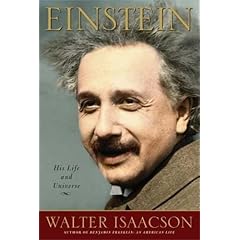
While speaking on the topic of atheism...
Here are some excellent quotes from Albert Einstein about God, religion, science and atheism from the soon to be released book Einstein: His Life and Universe by Walter Isaacson. © 2007 by Walter Isaacson. (To be published by Simon & Schuster, Inc.)
Shortly after his 50th birthday, Einstein also gave a remarkable interview in which he was more revealing than he had ever been about his religious sensibility. It was with George Sylvester Viereck, who had been born in Germany, moved to America as a child and then spent his life writing gaudily erotic poetry, interviewing great men and expressing his complex love for his fatherland. Einstein assumed Viereck was Jewish. In fact, Viereck proudly traced his lineage to the family of the Kaiser, and he would later become a Nazi sympathizer who was jailed in America during World War II for being a German propagandist.
Viereck began by asking Einstein whether he considered himself a German or a Jew. "It's possible to be both," replied Einstein. "Nationalism is an infantile disease, the measles of mankind."
Should Jews try to assimilate? "We Jews have been too eager to sacrifice our idiosyncrasies in order to conform."
To what extent are you influenced by Christianity? "As a child I received instruction both in the Bible and in the Talmud. I am a Jew, but I am enthralled by the luminous figure of the Nazarene."
You accept the historical existence of Jesus? "Unquestionably! No one can read the Gospels without feeling the actual presence of Jesus. His personality pulsates in every word. No myth is filled with such life."
Do you believe in God? "I'm not an atheist. I don't think I can call myself a pantheist. The problem involved is too vast for our limited minds. We are in the position of a little child entering a huge library filled with books in many languages. The child knows someone must have written those books. It does not know how. It does not understand the languages in which they are written. The child dimly suspects a mysterious order in the arrangement of the books but doesn't know what it is. That, it seems to me, is the attitude of even the most intelligent human being toward God. We see the universe marvelously arranged and obeying certain laws but only dimly understand these laws."
Is this a Jewish concept of God? "I am a determinist. I do not believe in free will. Jews believe in free will. They believe that man shapes his own life. I reject that doctrine. In that respect I am not a Jew."
Is this Spinoza's God? "I am fascinated by Spinoza's pantheism, but I admire even more his contribution to modern thought because he is the first philosopher to deal with the soul and body as one, and not two separate things."
Do you believe in immortality? "No. And one life is enough for me."
Einstein tried to express these feelings clearly, both for himself and all of those who wanted a simple answer from him about his faith. So in the summer of 1930, amid his sailing and ruminations in Caputh, he composed a credo, "What I Believe," that he recorded for a human-rights group and later published. It concluded with an explanation of what he meant when he called himself religious: "The most beautiful emotion we can experience is the mysterious. It is the fundamental emotion that stands at the cradle of all true art and science. He to whom this emotion is a stranger, who can no longer wonder and stand rapt in awe, is as good as dead, a snuffed-out candle. To sense that behind anything that can be experienced there is something that our minds cannot grasp, whose beauty and sublimity reaches us only indirectly: this is religiousness. In this sense, and in this sense only, I am a devoutly religious man."
.....
But throughout his life, Einstein was consistent in rejecting the charge that he was an atheist. "There are people who say there is no God," he told a friend. "But what makes me really angry is that they quote me for support of such views." And unlike Sigmund Freud or Bertrand Russell or George Bernard Shaw, Einstein never felt the urge to denigrate those who believed in God; instead, he tended to denigrate atheists. "What separates me from most so-called atheists is a feeling of utter humility toward the unattainable secrets of the harmony of the cosmos," he explained.
In fact, Einstein tended to be more critical of debunkers, who seemed to lack humility or a sense of awe, than of the faithful. "The fanatical atheists," he wrote in a letter, "are like slaves who are still feeling the weight of their chains which they have thrown off after hard struggle. They are creatures who--in their grudge against traditional religion as the 'opium of the masses'-- cannot hear the music of the spheres."
Einstein later explained his view of the relationship between science and religion at a conference at the Union Theological Seminary in New York. The realm of science, he said, was to ascertain what was the case, but not evaluate human thoughts and actions about what should be the case. Religion had the reverse mandate. Yet the endeavors worked together at times. "Science can be created only by those who are thoroughly imbued with the aspiration toward truth and understanding," he said. "This source of feeling, however, springs from the sphere of religion." The talk got front-page news coverage, and his pithy conclusion became famous. "The situation may be expressed by an image: science without religion is lame, religion without science is blind."
SOURCE: Time: 5 APRIL 2007: Einstein and Faith
HAT TIP: Get Religion
<>< TM
Atheist Evangelism
In my article "Why Be a Christian?" I make a reference to the increasingly nasty rhetoric coming from militant atheist fundamentalists. Well, I'm not the only one who's been noticing, not by a long shot...
In Thursday's Wall Street Journal (where else?) there was a very long, interesting article (though not very well written) about the increasing militancy of the atheists of Europe, who seem to be in a war of rhetoric with their none too tolerant counterparts: Islam. However, it's not just Islam that's on the rise in Europe, as Europeans get fed-up with the emptiness and nihilism of their socialist utopias, they are turning back to Christianity, though it's only in small numbers. Still, it seems as if secular humanism has bottomed out, and the non-faith of atheism is taking note.
Nature abhors a vacuum, and so does the human spirit; you can only fill it with so much booze, drugs and sex, then it either becomes numb or angry. The meaning of life is not the pleasure principle; only a fool would be convinced that the meaning of life is maximized pleasure by any means possible, which seems to be the only positive message that the atheists have at their disposal. It's easy to criticize religion, I do it all the time, but it's much, much more difficult to come up with a creditable alternative, and man being the measure of all things simply doesn't measure up.
So here is a nice, long excerpt from the WSJ article:
SOURCE: Wall Street Journal: 12 APRIL 2007: THE NEW CRUSADERS: As Religious Strife Grows, Europe's Atheists Seize Pulpit
<>< TM
In Thursday's Wall Street Journal (where else?) there was a very long, interesting article (though not very well written) about the increasing militancy of the atheists of Europe, who seem to be in a war of rhetoric with their none too tolerant counterparts: Islam. However, it's not just Islam that's on the rise in Europe, as Europeans get fed-up with the emptiness and nihilism of their socialist utopias, they are turning back to Christianity, though it's only in small numbers. Still, it seems as if secular humanism has bottomed out, and the non-faith of atheism is taking note.
Nature abhors a vacuum, and so does the human spirit; you can only fill it with so much booze, drugs and sex, then it either becomes numb or angry. The meaning of life is not the pleasure principle; only a fool would be convinced that the meaning of life is maximized pleasure by any means possible, which seems to be the only positive message that the atheists have at their disposal. It's easy to criticize religion, I do it all the time, but it's much, much more difficult to come up with a creditable alternative, and man being the measure of all things simply doesn't measure up.
So here is a nice, long excerpt from the WSJ article:
THE NEW CRUSADERS
As Religious Strife Grows,
Europe's Atheists Seize Pulpit
Islam's Rise Gives Boost
To Militant Unbelievers;
The Celebrity Hedonist
By ANDREW HIGGINS
April 12, 2007; Page A1
CAEN, France -- With 40 minutes to go before show time, the 500-seat Alexis de Tocqueville auditorium was already packed. A fan set up a video camera in the front row. A sound engineer checked the microphones.
The star: Michel Onfray, celebrity philosopher and France's high priest of militant atheism. Dressed entirely in black, he strode onto the stage and looked out at the reverential audience for his weekly two-hour lecture series, "Hedonist Philosophy," which is broadcast on a state radio station. "I could found a religion," he said.
Mr. Onfray, 48 years old and author of 32 books, stands in the vanguard of a curious and increasingly potent phenomenon in Europe: zealous disbelief in God.
Passive indifference to faith has left Europe's churches mostly empty. But debate over religion is more intense and strident than it has been in many decades. Religion is re-emerging as a big issue in part because of anxiety over Europe's growing and restive Muslim populations and a fear that faith is reasserting itself in politics and public policy. That is all adding up to a growing momentum for a combative brand of atheism, one that confronts rather than merely ignores religion.
Karen Armstrong, a former Catholic nun and prominent British author on religion, calls the trend "missionary secularism." She says it mimics the ardor of Christianity, Islam and Marxism, all of which have at their core an urge to convert nonbelievers to their worldview.
Mr. Onfray argues that atheism faces a "final battle" against "theological hocus-pocus" and must rally its troops. "We can no longer tolerate neutrality and benevolence," he writes in "Traité d'athéologie," or Atheist Manifesto, a best seller in France, Italy and Spain. "The turbulent time we live in suggests that change is at hand and the time has come for a new order."
[Michel Onfray]
As with many fights involving faith, Europe's struggle between belief and nonbelief is also a proxy for other, concrete issues that go far beyond the supernatural. In this case, they involve a battle to define the identity of a continent.
Half a century after the 1957 Treaty of Rome laid the foundations for the now 27-nation European Union, Europe has secured peace and prosperity. But it is deeply uncertain about what binds the bloc together beyond mere economic self-interest. Says Ms. Armstrong: "There is a big fight going on to define European civilization."
In London last month, leading British atheists squared off with defenders of faith in a public debate on the motion, "We'd be better off without religion." Tickets cost nearly $40 but so many people wanted to attend that the event was moved to a bigger venue with over 2,000 seats. It still sold out. The audience declared the atheists the victors, by a margin of 1,205 to 778, with a few score abstentions.
In Germany, a wealthy furniture manufacturer is funding a "think tank of Enlightenment," a group of scientists and others committed to debunking religion. It is named after Giordano Bruno, a 16th-century philosopher and cosmologist who was burnt at the stake as a heretic. In Italy, one fervent nonbeliever has gone to the European Court of Human Rights with a claim that the Roman Catholic Church is guilty of fraud: Jesus, he says, never existed.
Prime Catalyst
Alarm over Islam has acted as the prime catalyst for much of the polemic. Europe's Muslim populace, estimated at between 15 million and 20 million people, is growing more numerous, more vocal and, in some cases, more religious. The clash also feeds on a deeper confrontation that dates back to Europe's Enlightenment, the 18th-century intellectual movement that asserted the primacy of reason over superstition.
"The battle over religion is restarting. It is going to be a difficult one," says Terry Sanderson, president of Britain's National Secular Society, an organization that was founded in the 19th century but has now gained a new vibrancy. Membership has doubled in the past four years, to around 7,000, says Mr. Sanderson. For converts from Christianity, the society provides a certificate of "de-baptism." "Make it official!" urges the society's Web site, www.secularism.org.uk2.
The atheist cause won a big-name endorsement late last year when pop star Elton John, in an interview, said organized religion turned people into "hateful lemmings" and should be banned.
The backlash against religiosity has even seeped into Europe's Muslim community. In February, Mina Ahadi, an Iranian-born woman in Cologne, Germany, set up the Continent's first Muslim atheist group: the National Council of Ex-Muslims. She immediately started getting death threats and was put under police protection.
"Our main message is: 'We don't believe,' " says Ms. Ahadi, talking in a coffee shop next to Cologne Cathedral, a towering tribute to faith that took 600 years to complete. A police guard hovered nearby.
Atheism, Ms. Ahadi says, must confront religion head-on -- and adopt its methods. Her group started with just 30 members in February and a month later had more than 400. It is lobbying European Union officials for restrictions on the veil and organizing a public meeting at which ex-Muslims will explain why they quit. "If you want to work against Muslim movements, you have to be like them," she says. "We have to go outside and say what we're fighting for."
Europe's atheist campaigners have also made a splash in America. "The God Delusion," a book by Oxford Professor Richard Dawkins, has been on the New York Times hardcover nonfiction best-seller list for 28 weeks. Another British atheist, U.S.-based writer Christopher Hitchens, has written his own antireligious treatise, "God Is Not Great: How Religion Poisons Everything," due out in May.
Christianity, once the bedrock of Europe's identity, has been losing worshipers on the Continent for at least half a century, though some opinion polls suggest the downward trend has bottomed out. Around three-quarters of Europeans still describe themselves as Christians. But only a small minority go to church. In Western Europe, according to polls, fewer than 20% do.
The number of atheists is hard to pin down. Some surveys put the figure at under 3%, but others say it is much higher.
...
Religious leaders are pushing back against the assertive unbelievers. The Church of England's Archbishop of York, John Sentamu, complained in a December statement about "illiberal atheists who have joined forces with aggressive secularists." He was responding to demands that Jesus be removed from nativity plays and that Christmas parties be called "winter festival" gatherings.
Mr. Onfray's atheist tract, recently translated into English, has prompted three book-length rebuttals by angry Christians and a flood of articles. To counter Prof. Dawkins's "God Delusion," an Oxford theology professor wrote his own book, "The Dawkins Delusion."
Both atheists and their foes agree on one thing: God -- declared dead over a century ago by German philosopher Friedrich Nietzsche -- is making a comeback, at least as a focus of controversy. "Faith is on the public agenda in a way that is unprecedented in recent times," proclaimed the founding manifesto of Theos, a new British-based Christian think tank.
Europe's atheist movement has no Vatican-like central command and springs from many different sources. Some adherents have personal grievance. Mr. Onfray spent part of his youth in a home run by Catholic priests, who he says mistreated him and abused others. Ms. Ahadi, head of the German ex-Muslims group, says her first husband was executed by Islamic revolutionaries in Iran.
....
Pierre Andrieu, a 63-year-old former executive with BNP-Paribas, a French bank, travels up to Caen each week from Paris for the lecture show. He makes the trip, he says, because he shares Mr. Onfray's take on faith--and fears that religion is making a comeback. "It is far more present than before," he says. "This need for religion is very, very strong. Religion is like magic. It is all about tricks."
SOURCE: Wall Street Journal: 12 APRIL 2007: THE NEW CRUSADERS: As Religious Strife Grows, Europe's Atheists Seize Pulpit
<>< TM
Wednesday, April 11, 2007
doctors and faith
From the Chicago Sun-Times:
<>< TM
Doctors and FaithRead the rest here.
April 10, 2007
BY JIM RITTER Health Reporter jritter@suntimes.com
A majority of American doctors believe God or another supernatural being intervenes in patients' health, a study has found.
And nearly two in five doctors believe religion and spirituality can help prevent bad outcomes such as heart attacks, infections and even death, according to the University of Chicago nationwide survey of 2,000 physicians.
"Most physicians apply medical science while maintaining a belief that God intervenes in patients' health," Dr. Farr Curlin and colleagues wrote in the Archives of Internal Medicine.
Cures 'that don't make sense'
Religious doctors were more likely than nonreligious doctors to believe this -- and to report that patients bring up religious issues.
Dr. Wayne Detmer, an internist at Lawndale Christian Health Center, said all doctors have seen cures of patients "that don't make sense based on our current understanding of physiology or medicine."
Detmer recalls one patient, disabled by a neurological condition, who was able to walk again after praying. A pastor, diagnosed with terminal lymphoma, is still alive after 13 years. And a suicidal patient has regained the willingness to live after prayer.
Detmer said he can't prove God made these patients better. But he notes the Bible says Jesus healed people. "It's not so much of a stretch to believe He can still do it."
<>< TM
Tuesday, April 10, 2007
the Quiznos Coyote

This is a MUST SEE...
Last week (when it was still WARM!) a wild COYOTE walked into a Quiznos sandwich shop in DOWNTOWN CHICAGO, and sat down inside the beverage cooler!
Check it out here: Chicago Tribune: Coyote Visits Loop Restaurant but doesn't eat
<>< TM
Monday, April 09, 2007
blogging for jobs
Well, I must admit I wasn't expecting to see an article like this...but it's good news for those of you who WANT people to know the real person behind the blog.
From the Wall Street Journal (where else?):
SOURCE: Wall Street Journal: 10 APRIL 2007: How Blogging Can Help You Get a New Job
Gee, maybe I should start using my real name...and post my resume too...like this girl has...(and you can see her blog here.)
<>< TM
From the Wall Street Journal (where else?):
How Blogging
Can Help You
Get a New Job
By SARAH E. NEEDLEMAN
April 10, 2007
Corporate recruiters have long surfed the Web to vet potential hires, but now they are also surfing blogs to unearth job candidates, expanding their talent pool and gaining insights they say they can't get from résumés and interviews.
Ryan Loken, a Wal-Mart Stores Inc. recruitment manager, says he spends one to two hours a week searching through blogs for new talent or additional information about the candidates he has interviewed. "Blogs are a tool in the tool kit," he says. Since he joined the Bentonville, Ark., retail giant three years ago, Mr. Logen estimates that Web journals have helped him fill 125 corporate jobs. Most of the recruits were referred to him by bloggers and blog contributors, and some were the writers themselves.
In addition to blogs that focus on their industry or field of interest, recruiters say they check candidates' blogs about noncareer-related topics for evidence of writing skills and clues to how well rounded they are.
Most blog-related recruits are professionals in technology and media because jobs in these fields often require knowledge of the blogosphere, says Kirsten Dixson, a founding partner at Brandego LLC, a career-management firm in Exeter, N.H., that specializes in personal branding.
In June, Brian Balfour's blog, SocialDegree.com, inspired an unsolicited offer for a product-manager job from an executive at Zoom Information Inc. "I was impressed by the points Brian was making and the way he was making them," says Russell Glass, vice president of products and marketing at the Waltham, Mass., technology company. The blog also offered details about Mr. Balfour's work history and education. "It was a no-brainer to give him a call and see if he'd be interested," Mr. Glass says.
Mr. Balfour says he was intrigued when he heard about the opportunity. "It came at a time that was pretty right for me because I was just coming off selling a business and looking for where I would head next," he says. Three months later, Mr. Balfour, who is 24 years old, got the job.
Greg Sterling, a strategy consultant for Internet companies and a blogger in Oakland, Calif., describes job offers as "a natural byproduct of the exposure you get from blogging." He says he gets about 15 inquiries a month from companies and search-firm recruiters seeking to fill consulting gigs and full-time jobs. "My blog is a vehicle that keeps me exposed to people on a daily basis," he notes.
SOURCE: Wall Street Journal: 10 APRIL 2007: How Blogging Can Help You Get a New Job
Gee, maybe I should start using my real name...and post my resume too...like this girl has...(and you can see her blog here.)
<>< TM
Over Achiever: Alexander Creswell

The above picture is New York's Queensboro bridge...done in WATERCOLOR. That's right, just watercolor. The artist, Alexander Creswell, has got to be one of the most talented artists I've come across in recent days. His watercolors rival oil paintings in their richness and detail.
Check out a New York Times article about him and his work here.
I highly encourage you to check out his web site, and view the slideshow of his works. This artist is worthy of our attention; which is not something I say very often in the world of contemporary art.
(hat tip: New Criterion blog)
<>< TM
Friday, April 06, 2007
why be a christian?
Though you wouldn't know it by the lack of commercialism, it is Easter, not Christmas that is the most significant Christian holiday of the year. In films and movies, the importance of one of the events of the Easter season, the paradoxically named "Good Friday" which features the bloody torture and crucifixion of Jesus, has become, sadly, the main focus of Easter. Instead of highlighting that theme, I wish to re-emphasize the importance of the most significant event of Jesus' life and the event which causes the greatest controversy for non-Christians: Jesus' resurrection from the dead, which traditionally takes place on Easter Sunday. While a whole lot of film and theology focuses on his crucifixion to the exclusion of all else, it is the resurrection that is the culmination and exclamation point of all Jesus' life and ministry. Without the resurrection, we have just another bold teacher, a revolutionary even, who like Socrates before him, is put to death by the hands of his own people, his main offense being the speaking of the plain truth.
But Jesus did more than just speak truth, he WAS the truth...the literal TRUTH, in bodily form. In other words, Jesus was, and still is, God in the flesh. He didn't come just to re-emphasize the great moral teachings of the Bible and Jewish teaching, rather he came to DO, not just to teach. And his single greatest act was to demonstrate for us all that death is not the end of life, but rather the beginning.
But I don't wish to de-emphasize the importance of the torture and crucifixion of Jesus, well demonstrated by such movies as Mel Gibson's "The Passion", as it too holds an important moral lesson for us, as well as theological; a truth can be best summed up by the short, but accurate saying: "You have to go through hell to get to heaven."
Perhaps for you, the dear reader of this blog, life is just one wonderful event after the other, rich in possibilities and opportunities. But for me, pseudo Thomas Merton, life is just one, long, slow trip through Hades, with an occasional rest stop. Life has been very hard and difficult, and much too often the problems and pains of life on earth have overwhelmed me, well beyond my ability to handle them. By all rights and means, I should be, at least, on heavy duty psychiatric drugs, if not locked up in the real-world equivalent of the Arkham Asylum.
Yet here I am, drug free and asylum free, and the only reason I am, is due to the love and goodness of God. Nothing that science or society has ever offered me has been of any use in my deepest problems, but that which is freely offered by God through Jesus, is better than the best the world has to offer.
CHRISTIANITY: THREE MAIN TYPES.
In the realm of Christianity, there are divisions like protestant vs. Catholic, evangelical vs. mainstream, liberal vs conservative, and so on. But rather than focus on these obvious external divisions, I'd like to point out what I've believe are the three main types of Christianity as practiced in the United States.
1. SOCIAL CHRISTIANITY -- this is for those who go to church, and claim the title as Christian, because they like the social atmosphere of church, believe in God, and feel good that they belong to an organization devoted to such an interesting guy like Jesus. Beyond that, they don't really allow their lives to be affected by the TEACHINGS of Jesus or the prophets, rather they're just in it for their own selfish purposes.
2. RELIGIOUS CHRISTIANITY -- these are the Christians who go to church every Sunday morning, or in the case of some churches, every Sunday morning, and every Sunday morning Bible class, and Sunday evening service, and anything else that happens during the week. For Catholics, a truly religious person might go to mass every day of the week. These are the people who are very wrapped up in the ritual and culture of Christianity: they take God and theology very seriously, but for all their zeal, don't really understand any of it. Yet the religious observances makes them feel good, (and rather "righteous" besides, if you know what I mean...) and often these religious Christians are thought to be the true believers and imitators of Christ.
3. SPIRITUAL CHRISTIANS -- This is a rather small subset of Christianity, and they are they least visible and the least understood. Spiritual Christians are not content just to be one outwardly, by attending church services and carrying a big Bible and so on, but they are far more interested in being a Christian inwardly. They understand that Jesus was not trying to create a new religious institution, but was rather conveying truths and insights that can literally transform a person from the inside out. Spiritual Christians are not interested in having huge churches, or being on TV and radio, or becoming household names, rather they are perfectly content to live in obscurity, sometimes even actively seeking it out. They know the great secret of the teachings of Jesus, Paul and Peter: that Christianity is about transformation of oneself through the power of God. Sure, there are rules and regulations that are important to follow, but they are only important if you follow them to where they LEAD, which is the very real existence of God himself. Often spiritual Christians are not too concerned about denominations and other divisions, but will actively support any church that preaches the truth about Jesus.
Of course these three main types are not three exclusive sets, but there is overlap, and a person can sometimes be both outwardly religious, and inwardly quite spiritual. Or a person can be a social Christian, but be quite rapped up in Christian culture and so forth. The three types are really just three points along the continuum that is Christianity, the social Christian being the lowest point on the continuum, the spiritual Christian being the pinnacle.
I've been everywhere along that continuum, but there is no reason one has to be. For the record, the Christianity that I'm advocating in this post is that of the third type, the pinnacle: Spiritual Christianity.
THE HEART OF CHRISTIANITY
Christianity can be, and has been, systematized into a bunch of neat little doctrines and dogmas that one must believe if they are to be truly regarded as "Christian." I guess that sort of thing is important and has it place, but please listen to what I'm about to tell you.
Christianity is NOT a system. It is not a bunch of rules and regulations one follows in order to be worthy, or to be a better person, or to be rich and famous. While all those things are certainly possible, and have been exploited by various personalities within Christianity throughout the ages, there is something far more important at stake.
If Christianity is NOT a system of beliefs, then what is it? Quite simply, Christianity is all about relationships. And there is one relationship in particular which is paramount, the one between you and God himself.
Christianity is unique amongst all the world's religions, even unique among the "big three:" Islam, Judaism, and itself; in that the very core of the faith is the idea and the reality that you can come to know God in a very personal, subjective fashion. He's not some all powerful being that is "out there" some where in outer space or beyond (like Islam and Judaism), but rather God is so close as to be literally inside of you. But no Christian goes so far as to say that because God is inside of you, then you ARE God. That is a point made by the New Agers, but Christians understand that there is quite a bit of difference between ourselves and the Ultimate Power of the Universe. Nor do we equate God and the Universe (matter, really) like many New Agers and pagans do. Again, God is a separate, complete BEING in and of himself, and while he transcends everything, even matter, he is not matter (or "pure engergy"), nor is he us, but he is himself. "I AM WHO I AM" is the ultimate expression of unique individuality, as well as existence.
Hence, God is a being just as were are beings, and he is a being who one can come to know in an intimate way.
INTIMACY WITH GOD
The modern American understanding of "intimacy" is often used as a code word for sexual intercourse. However, that really cheapens our understanding of the term, as well as its importance. Intimacy is not about sexual union, it is about absolute trust and being able to trust another being with out fear, without pain and without suffering. Yet sadly, for an overwhelming majority of us, there is no one on this earth we can trust with the absolute assurance they will not harm us in any way. Hence, we hold back, even when we think we aren't. It's not that we don't want intimacy with another person, it's just that it seems like an ideal which is simply not possible in this life.
But what if I told you that absolute intimacy, absolute trust, can be found? What if I said there was a person who loved you far beyond any love you are capable of, and who will only ask that you try to love them in return? What if I told you this person will never, ever hold your past against you, but rather is more than willing to help you overcome all that garbage and misery in your past? Would you be interested in such a person?
Well, that person is Jesus; or you can call him God, which is just as appropriate. His greatest desire is not to make everyone into little moral robots who never do wrong, but rather his greatest priority is entering into an intimate, personal relationship with each and everyone of us. And through this intimate relationship, we learn a powerful truth that no scientist will ever be able to get a hold of through empirical methods: God is REAL, God is LOVE, and God wants the very best for us. But be warned: what we might consider the best and what God considers the best can be two very different realities.
So what is God's idea of the best for us? Simple: that we become beings that literally embody all of his qualities, and live a life that not only brings us great joy and peace, but live a life that brings forth these qualities in others. Amongst household names, Mother Teresa and Pope John Paul II would be the best examples of this in the Catholic realm, Billy Graham perhaps the best example amongst the Protestants.
Often we humans look for happiness and peace in all the usual places: relationships with other humans, money, fame, success, health and so on. But what if you could have all the peace and happiness those things bring, without all the work, bother and evil side-effects? Would that be something that interests you?
Why do people want money, fame and success anyway? The answer is very simple: because it FEELS good; it makes one "happy." But what if you could have the "happiness" without having to have the stuff that is normally associated with it? What if this happiness were so deep-seated, so powerful, that you wouldn't even want all the other stuff because it would diminish your happiness? Such a state of inner bliss is possible, and in one of those strange paradoxes that can only be experienced to be understood, it comes most easily to those who don't have or bother with all that other stuff.
A relationship with God is like the greatest romance you could ever imagine, times a thousand. It has all the feelings and goose bumps of earthly love and companionship, but none of the evil side-effects: jealously, betrayal, anger, and so on...well, at least not from God's side of the equation! God can do and be many things, but one thing he is not is dishonest or deceptive. He is what he is.
Once you realize that God is real, and that he wants to have a relationship with YOU, you run-of-the-mill human being, not much else in life really matters so much. Imagine someone who is ALWAYS glad to see you, always wants to spend time with you, is always willing to discuss any topic you like, and someone you can absolutely trust with your deepest darkest, secrets and needs, without fear you will be betrayed. Sadly, there is no human on this earth who can fulfill those desires, but there is one in Heaven who can.
Even more, what wouldn't you give for someone who's main desire is your own personal growth and development as a human being? Someone who can enable within you those virtues and qualities that seem so impossible? How would you like someone is completely and totally for your best interests, all the time, and will not ever enable your deep, dark failings?
Again, such a person exists, and only exists, in the person of Jesus.
While it may be somewhat confusing as to why Christians have "three gods," let me shine a little light on that topic: the Christian God is one being, but who's being is expressed in three distinct persons: the Father in Heaven, the son Jesus and the Holy Spirit. Why these three? Simple: it is the way we need to have and understand God. God the Father is the ultimate transcendent being, who is beyond our human understanding and reason. God the son Jesus is the God you can talk with, joke with, and put your arm around; he is just like us! And God the Holy Spirit is that "divine spark" within: it is God within us, in our hearts, at the very core of our being. Pretty cool, isn't it? But all three are in complete unity and harmony, hence their "oneness." They don't fight, they don't argue, they never, ever have disagreements. They are always and forever in agreement and all pursue the exact same goal: relationship with mankind.
God wants the best for us, but to get us to see and appreciate the best, he needs to knock down and cart away all those other ideas and concepts of what we think the best is, and this can be a rather painful and inconvenient process. For there is nothing more shocking and incomprehensible to a person than the truth, especially the truth about themselves. There is no more destructive force in all of mankind; but, conversely, there is no more powerful force for healing and wholeness. Hence the healing ministry of Jesus: it was not just a means to show off his divine power, it with a demonstration of the power of ultimate Truth.
And that idea, the idea of there being ultimate, absolute TRUTH is perhaps the most shocking thing of all in the realm of Christianity. Truth, by it's very nature, is exclusive, unique, and discriminating. In Christianity, there is always a BEST answer. Truth is, by it's very definition, narrow, tiny, and rigid. Hence truth throughout the ages has always gotten a bum rap, but never so much so as right now in our own times. How often have you heard the phrase "everything is relative." That is the same as saying there is no absolute truth, it just depends on who you are and where you came from. But the problem with the relativity concept is self-evident: conflict. If one thinks killing people who are Jewish because they are Jewish is a good idea, and another person thinks killing Jewish people because they are Jewish is a bad idea, then you have conflict. Hence, the idea that truth is relative is the greatest enabler of conflict you could possibly have, for conflicting idea are just that: instigators of conflict.
One thing a person learns who pursues a relationship with God is that truth is ultimately absolute and unique. There may be some things on this earth that are "relative" to one's perspective, but there are many things which are universally true for everyone, whether or not someone wants to notice. Truth, like facts, is a stubborn thing.
TO SEE CLEARLY
The ultimate benefit of Christianity is often said to be going to Heaven after you die, and to spend all eternity enjoying the peace, love and happiness that we are denied in our life here on Earth. But there is another very important benefit to Christianity that comes into play while we are still very much alive: the ability to see clearly.
I'm not speaking of glasses or optics when I speak of seeing clearly, rather I'm referring to the ability to know and understand truth. To be able to see into men's hearts, to see beyond the words written on a page, to see beyond the speech given by the politician or school teacher into the very core of their "agenda" if you will.
Jesus if often referred to as a prophet, and in a very real sense, he was a prophet. Often, both in Christian and secular circles, one likes to think of prophets as being those people who can foresee the future, which is certainly one element of being a prophet. But more in accord with Biblical and Jewish tradition, a prophet is not one who can accurately predict the future, but rather a person who can see the truth of a situation in the hear & now, and call a spade a spade.
To be more blunt: a prophet is a person who sees past the pomp and circumstance, into the secret places of a man's heart. When you are in the presence of a real prophet, you feel rather uneasy, especially if you have something to hide, because you literally feel like they can see right through you, right into your very thoughts: and they can.
But even more so than the ability to see what is covered up, a prophet is the most unpopular person in a society for a very significant reason: they take a stand for the truth. Truth, love and goodness are all complimentary concepts, just as lies, hate and evil are complimentary. But in the hierarchy of concepts, truth is arguably the most important, for without truth, you cannot have love nor goodness.
Hence prophets stand for what is true, and expose lies in order that all other virtues; like love, goodness and peace; can flourish. But there is an obvious problem with such a stand: it hurts people's feelings; it crushes their pride and self-sufficiency; and makes them feel "unclean." Hence true prophets are almost always persecuted unto death, just like Jesus and Socrates. Of the twelve apostles that followed Jesus, it is known that all except for John the Apostle (and Judas Iscariot) were martyred, along with many thousands of Christians who came after them. People just don't put themselves in a position to be killed by others if they know what they are proclaiming is itself a lie, a fabrication. People don't die for lies.
Now to be clear: being a prophet has NOTHING to do with self-righteousness and all that sort of garbage; rather a true prophet EXPOSES the lie of self-righteousness, for no one is truly righteous anyway, and a prophet more so than anyone else knows this very, very well. Hence the greatest enemies of the prophets are often the self-righteous, religious fanatics that are evident in every faith and non-faith. Even atheists, who of all people should know better, have their squad of militant fundamentalists who proclaim the non-faith of atheism with all the rigor and energy of a Billy Graham. Their names are very well known to those of us who are interested in science and religion: Steven Pinker, Daniel C. Dennet, Richard Dawkins, Stephen J. Gould, Sam Harris, David Mills, and back in Darwin's day, Thomas Huxley; a.k.a. "Darwin's Bulldog." They are much more like the self-righteous Christians they attack than they are different, as if Christianity and other religions are the only ideologies that are capable of self-righteousness! A self-righteous atheist is just as ugly as a self-righteous religious nut, there really is no difference.
Yet despite the danger, a stand for truth must be taken. It does no good if you are a prophet, and seeing evil, you keep your mouth shut and say nothing. In order for evil to be eradicated, it must be exposed, and only a prophet has the ability to take a stand regardless of the consequences.
Perhaps that's why I like movies like "They Live" and "The Matrix" -- one of the main plot points in both films is that the protagonist is suddenly given the ability to "see" the actual reality around him, rather than the construct he is given. And so it is with Christians, spiritual Christians anyway. Through a relationship with God, you are given the ability to see that which is "hidden." I've put scare quotes around the term "hidden" for a reason: evil never really hides, it is brazen and it is bold and it loves lots of public attention and adulation. You don't discover a bizarre complex of conspiracies (Knights Templar, Illuminati, the Trilateral Commission, etc.) when you are given the power to see, rather you find that the conspiracies are there to throw one off the scent of what the real problem is: man's near universal contempt for the truth. It's much easier for us to believe that there is a small group of men manipulating everyone and everything than it is for us to realize that we ourselves are living a lie, let alone contributing to it! Hence a true prophet is never a popular person.
Are spiritual Christians the equivalent of the Old Testaments prophets? In a word, yes, that's what we are called to be. However, too many Christians get the wrong idea, and think that being a prophet is getting in someone's face and shouting Bible verses at him. But in reality, the prophets were almost ALWAYS sent to those who were, supposedly, believers and worshipper in God! In other words, prophets were sent to the hypocrites--you can imagine how this could cause problems, for there is nothing worst than a hypocrite who has convinced himself of his righteousness, regardless of his faith or non-faith. Hence, most prophets end up getting killed; not a line of work for the feint-of-heart. Note that prophets are not killed because they are obnoxious and rude, but because they take a stand for what is true and right and refuse to compromise. When a group or movement of any type starts to resort to violence or obnoxious behavior to get it's point across, you can almost always rest assured that what they stand for is a lie, even if you know nothing about their ideology.
SO WHY BE A CHRISTIAN???
A TRUE CHRISTIAN stands for what is right and just, without being obnoxious. They do not jump on the band-wagon for the feel-good cause-of-the-day, whether it be global warming, baby seals, or consumerism. Rather a true, spiritual Christian will go after the greatest crisis of them all: the evil that lurks in every human heart, especially our own.
And once we have dealt with the evil in our own heart, we can begin helping those who wish to escape the darkness, much like Morpheus helping Neo in The Matrix film. And just as Morpheus and Neo realized, there are those who will simply prefer to live in the darkness, and will destroy anyone who attempts to lift the veil.
But a true Christian knows that life on earth is short, and it is better to live a just, good life and be killed for it, than it is to live a mediocre, half-hearted existence and live to grow old. For death is certain, and certain as anything can be certain, and whether or not you grow old is immaterial, as is the question of living your life in such a way that you are a benefit to others, and not a stumbling block.
And Christians know that this life on earth is just a testing ground, a place to try and forge the hearts of men. We do not look forward to a long life here, but an eternal life in a much, much better place than this.
And Christians know that it is not God who chooses whether or not a person goes to Heaven or Hell, but they know it is the person them self who makes the choice; they choose by the way they live their life here on Earth. If they live a life that is a lie, and a life that glorifies in lies, then they will be allowed to live in the darkness of hell for all eternity, and will never have to put up with the light of Heaven. But for those who are much more interested in living a life that is honest, humble, and simple; they have made their choice, and it will be continued in the after-life. What you do, say and think in the here & now has consequences that are truly, literally, eternal.
To be a Christian, a true Christian, is to know God, to know the truth, to know true love and true goodness, and to enjoy them to the fullest. I know of know other "system" on this earth that can deliver on these things, not one.
So if these things are of interest to you, you are more than welcome to join. All that is required is a deep, unrelenting quest to know what is true, and the belief that the truth can be known.
<>< TM
Thursday, April 05, 2007
baby's got book
Just in time for Easter: "Baby's got BOOK."
"I like big bibles, and I cannot lie..."
(hat tip: my sister.)
<>< TM
"I like big bibles, and I cannot lie..."
(hat tip: my sister.)
<>< TM
Tuesday, April 03, 2007
leaving europe
The Dutch, who live in THE MOST LIBERALLY PROGRESSIVE country on planet Earth bar none, are leaving their left-wing Eutopia and heading--for the New World.
Here's an excerpt from an article that appeared on today's PajamasMedia web site:
<>< TM
Here's an excerpt from an article that appeared on today's PajamasMedia web site:
Setting up a farm in New Zealand? Start up a business in Tasmania or do you like to cash in on British Columbia’s construction boom?Read the rest of the article here: Time to Get Out
All these options were presented at a real ‘Emigration Fair’ in Amsterdam earlier this month which drew record crowds. Whatever pessimism there is in and about Europe and no matter how commentators try to figure out if this exodus is real, the market has smelled the opportunity and knows how to respond.
As opposed to “Give me your tired, your poor” many jurisdictions in the new world have discovered that the disgruntled Dutch are anything but tired and poor. They’re young, affluent, well-educated, entrepreneurial, fluent in English and smart enough to have figured that the time has come to get out as the future can no longer be found at home.
The numbers corroborate this trend. In the first nine months of last year a record number of Dutch packed their bags with some 100,000 leaving the country, an increase of 12% on the previous year. For this year another increase is expected and, according to some research bureaus the overall attitudes about leaving are changing as well.
This year some 32% are seriously considering a move as opposed to 26% last year according to the ‘Emigration Monitor’. What is even more revealing is that the 20 to 30 age group constitutes the largest group of leavers, a trend that got further momentum when one polling group figured out that about half of the nation’s adolescents would, given the chance, prefer to pack up and go. Last year’s number confirm that the Dutch are experiencing the largest net outflow of people since the post-war emigration boom of the 1950s and the remarkable attitude shifts will ensure that this trend will persist in the years to come.
<>< TM
the trouble with islam
Lot of awesome stuff in today's Wall Street Journal...I wish I could post the entire newspaper on my blog. But for the sake of brevity I'll just post the best thing I read in today's WSJ, and probably one of the best articles I've read in anywhere in recent days. It is an OpEd simply entitled "The Trouble With Islam," written by--I kid you not--a former terrorist!!!
Here is one long, juicy excerpt from the piece, but I high encourage you to read the whole thing yourself. I bold-faced key statements for those who don't have time to read it all.
<>< TM
Here is one long, juicy excerpt from the piece, but I high encourage you to read the whole thing yourself. I bold-faced key statements for those who don't have time to read it all.
The Trouble With Islam
Sadly, mainstream Muslim teaching accepts and promotes violence.
BY TAWFIK HAMID
Tuesday, April 3, 2007 12:01 a.m. EDT
Not many years ago the brilliant Orientalist, Bernard Lewis, published a short history of the Islamic world's decline, entitled "What Went Wrong?" Astonishingly, there was, among many Western "progressives," a vocal dislike for the title. It is a false premise, these critics protested. They ignored Mr. Lewis's implicit statement that things have been, or could be, right.
But indeed, there is much that is clearly wrong with the Islamic world. Women are stoned to death and undergo clitorectomies. Gays hang from the gallows under the approving eyes of the proponents of Shariah, the legal code of Islam. Sunni and Shia massacre each other daily in Iraq. Palestinian mothers teach 3-year-old boys and girls the ideal of martyrdom. One would expect the orthodox Islamic establishment to evade or dismiss these complaints, but less happily, the non-Muslim priests of enlightenment in the West have come, actively and passively, to the Islamists' defense.
These "progressives" frequently cite the need to examine "root causes." In this they are correct: Terrorism is only the manifestation of a disease and not the disease itself. But the root-causes are quite different from what they think. As a former member of Jemaah Islamiya, a group led by al Qaeda's second in command, Ayman al-Zawahiri, I know firsthand that the inhumane teaching in Islamist ideology can transform a young, benevolent mind into that of a terrorist. Without confronting the ideological roots of radical Islam it will be impossible to combat it. While there are many ideological "rootlets" of Islamism, the main tap root has a name--Salafism, or Salafi Islam, a violent, ultra-conservative version of the religion.
It is vital to grasp that traditional and even mainstream Islamic teaching accepts and promotes violence. Shariah, for example, allows apostates to be killed, permits beating women to discipline them, seeks to subjugate non-Muslims to Islam as dhimmis and justifies declaring war to do so. It exhorts good Muslims to exterminate the Jews before the "end of days." The near deafening silence of the Muslim majority against these barbaric practices is evidence enough that there is something fundamentally wrong.
The grave predicament we face in the Islamic world is the virtual lack of approved, theologically rigorous interpretations of Islam that clearly challenge the abusive aspects of Shariah. Unlike Salafism, more liberal branches of Islam, such as Sufism, typically do not provide the essential theological base to nullify the cruel proclamations of their Salafist counterparts. And so, for more than 20 years I have been developing and working to establish a theologically-rigorous Islam that teaches peace.
Yet it is ironic and discouraging that many non-Muslim, Western intellectuals--who unceasingly claim to support human rights--have become obstacles to reforming Islam. Political correctness among Westerners obstructs unambiguous criticism of Shariah's inhumanity. They find socioeconomic or political excuses for Islamist terrorism such as poverty, colonialism, discrimination or the existence of Israel. What incentive is there for Muslims to demand reform when Western "progressives" pave the way for Islamist barbarity? Indeed, if the problem is not one of religious beliefs, it leaves one to wonder why Christians who live among Muslims under identical circumstances refrain from contributing to wide-scale, systematic campaigns of terror.
<>< TM
Friday, March 30, 2007
How my eyes were opened to the barbarity of Islam
A "must read" article from the TIMES ONLINE: How my eyes were opened to the barbarity of Islam
Excerpt:
Hat tip: Breath of the Beast
<>< TM
Excerpt:
Once I was held captive in Kabul. I was the bride of a charming, seductive and Westernised Afghan Muslim whom I met at an American college. The purdah I experienced was relatively posh but the sequestered all-female life was not my cup of chai — nor was the male hostility to veiled, partly veiled and unveiled women in public.Read the whole article here.
When we landed in Kabul, an airport official smoothly confiscated my US passport. “Don’t worry, it’s just a formality,” my husband assured me. I never saw that passport again. I later learnt that this was routinely done to foreign wives — perhaps to make it impossible for them to leave. Overnight, my husband became a stranger. The man with whom I had discussed Camus, Dostoevsky, Tennessee Williams and the Italian cinema became a stranger. He treated me the same way his father and elder brother treated their wives: distantly, with a hint of disdain and embarrassment.
Hat tip: Breath of the Beast
<>< TM
Subscribe to:
Posts (Atom)